
"instant coffee market share"
300 article(s) found

Research on Market Evaluation and Investment Planning of China's Coffee and Beverage Industry from 2016 to 2020
The "Research report on Market Evaluation and Investment Planning recommendations of China's Coffee and Beverage Industry from 2016 to 2020" released by Booz data introduces the relevant overview of the coffee and beverage industry, the operating environment of China's coffee and beverage industry, and analyzes the current situation of China's coffee and beverage industry, the competition pattern of China's coffee and beverage industry, and the operation of key enterprises in China's coffee and beverage industry.
The first wave of instant coffee in the world is not in South Korea, and its market share is down 9.4% from the same period last year.
China Economic Network, Beijing, Dec. 8 (Reporter Wu Jing) according to Yonhap news agency, the industry data released by South Korea's Ministry of Agriculture, Food and Rural Affairs (Ministry for Agriculture, Food and Rural Affairs, hereinafter referred to as MAFRA) on Tuesday showed that although South Korea's total coffee consumption showed an upward trend in 2015, the market share of instant coffee continued to decline.
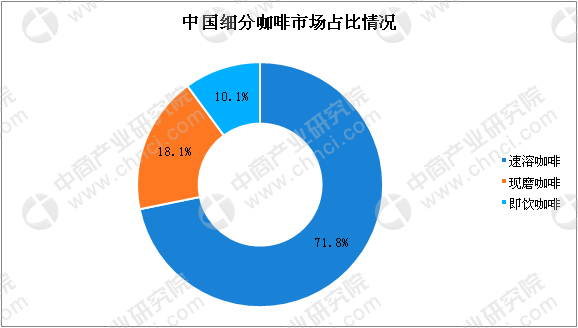
Annual data Analysis and Forecast of China's Coffee Market: instant Coffee Market share exceeds 70% (figure)
Professional coffee knowledge exchange more coffee bean information please follow the coffee workshop (Wechat official account cafe_style) China Business Intelligence Network News: with the improvement of our people's living standards and growing awareness of coffee culture, coupled with the huge demographic dividend, stimulate domestic coffee consumption. At present, China's coffee market is entering a stage of rapid development.

Shutting down the factory and stopping the production of Maxwell coffee lost to China.
Maxwell, a giant instant coffee, has recently been revealed to have closed its factory and stopped production in China. Maxwell once rose to prosper in the domestic instant coffee market, and even split the world with Nestl é in some stores. After the news of its defeat in China, it aroused widespread concern in the industry. Behind Maxwell's shutdown, the entire instant coffee market is no longer what it used to be. Maxwell Coffee Guangzhou Factory

The market share of instant coffee in China has declined year after year-freshly ground coffee has become a new favorite in the market.
There is a slogan that goes like this: on rainy days, music and chocolate go better; the comfortable and relaxing environment goes best with freshly ground coffee. In addition to freshly grinding coffee, the environment of the coffee shop is also very important. Why are some coffee shops so busy? Just like Paskucci Sanlitun store, there is a constant flow of people every day, with a daily turnover of nearly 10,000 yuan during the holidays. During a return visit to the headquarters

The G7 coffee of Yue Zhongyuan Coffee Group has become the leader in the national instant coffee market.
According to the Yue Youth Daily on July 7, according to the research results of two market research companies, the Dutch AC Nielsen and the Consumer Index Research Office, in 2011, the G7 coffee of the Vietnam Central Plains Coffee Group has become the leader in the national instant coffee market, accounting for 38% of the market share. With Passiona women's coffee, Zhongyuan Group has a 39 per cent market share in Vietnam. 2012

Nestl é launched a ready-to-drink coffee that can compete with freshly brewed coffee in convenience stores.
In recent years, China's ready-to-drink coffee market has grown rapidly. According to Euromonitor, the market for instant coffee reached 5.487 billion yuan in 2014, an increase of 22% over the same period last year, and is expected to reach 9.193 billion yuan by 2017, equivalent to a growth rate of 67.5% in three years. Although the market share of ready-to-drink coffee currently occupies the largest market share.
Is Nestl é too optimistic about instant coffee and a drag on mergers and acquisitions?
In February 2015, nearly 400 tons of unexpired Nestle coffee was destroyed in Dongguan, Guangdong, with a market value of nearly 10 million. Nestl é officials responded that the move was to keep products fresh and destroy stocks. The dumping of instant coffee by Nestl é (China) Co., Ltd. (hereinafter referred to as Nestle China) is the largest destruction of instant coffee since the factory was established in 1992. Xu Xiongjun, an expert on strategic positioning of food and beverage, believes that

Maxwell insists that it is difficult for a single product to turn around and the countdown to factory closure in China has entered.
Shutting down to reduce fixed costs No. 3 Jiaoyuan Road, Guangzhou is Maxwell's only production plant in China. Now there is no longer the original hustle and bustle, and it is difficult to find the original international coffee giant. In July 2015, the owner of the factory just changed from Mondelez International to Guangzhou Zhenyin Coffee Co., Ltd. Although Maxwell used to be one of the four largest coffee manufacturers in the world, it was last year

Maxwell was pulled out to restructure the instant coffee market.
Mondelez International, which was spun off from Kraft Foods two and a half years ago, has reintegrated its business, this time the coffee business Maxwell. The Nandu reporter saw in a "list of cases of unconditional approval of operator concentration in the fourth quarter of 2014" published on the official website of the Ministry of Commerce in the middle of this month. The Ministry of Commerce has approved Mondelez International and Aikang Control, which will take out the coffee business.
Last year's poor performance, why did Nestl é pour out the coffee?
In the 1980s, Maxwell and Nestle, two major instant coffee brands, were almost the forerunners of Chinese mainland coffee enlightenment education. But the coffee market is no longer just owned by Nestl é and Maxwell. Under pressure from many coffee products to carve up the market, Nestl é destroyed nearly 400 tons of unexpired instant coffee in February. The production capacity is ahead of the consumption capacity, and Nestle dissolves coffee.

Can't "Didi fragrant" Maxwell coffee be mixed in China?
Known for its fragrant and unfinished business, Maxwell, who entered the Chinese market as early as 1984, may be planning to close its plant in Guangzhou, China. According to the Daily Business News, Jacobs Douwe Egberts (hereinafter referred to as JDE), which owns the Maxwell coffee brand, said the company decided that from 2017, the Guangzhou plant in China would no longer produce, while the market in the Greater China region

China's freshly ground coffee market is expected to exceed 100 billion yuan in 2019, with Luckin Coffee accounting for 4% of the market share.
Professional coffee knowledge exchange more coffee bean information please follow the coffee workshop (Wechat official account cafe_style) from the type of coffee consumption, coffee consumption is divided into: instant, instant drink and fresh grinding. In the 1960s, instant coffee was widely sold on store shelves, leading to the first wave of coffee consumption. After that, the emergence of chain coffee shops promoted the second consumption boom.

Nestl é launched a ready-to-drink coffee that can compete with freshly brewed coffee in convenience stores.
Chill 4C, shake 8 times before drinking, and turn coffee into mousse. This is Nestl é's suggestion for its upcoming ready-to-drink coffee, snow camouflage (Shakissimo). As a product aimed at young white-collar workers, Nestl é wants to make Xuekamos different from similar products on the market in terms of drinking methods. Of course, there are more ways to attract young people.

Coffee year-end summary: what important events have happened in the coffee industry in 2016?
In the global range of drinking habits from instant to freshly ground coffee, currently ground coffee accounts for more than 87% of total coffee consumption, while instant coffee accounts for less than 13%. In China, instant coffee is the largest segment of the coffee consumption market, accounting for 84% of the market share, while the market share of ground coffee is only about 16%. In contrast, the growth rate of the domestic instant coffee market is actually not as fast as that of the freshly ground coffee market.

The size of the coffee market has increased to 150 billion. Coffee entrepreneurship is promising.
From the perspective of coffee drinking structure, globally, ground coffee accounts for more than 87% of the total coffee consumption, while instant coffee accounts for less than 13%. In China, instant coffee is the largest segment of the coffee consumption market, accounting for 84% of the market share. The market share of freshly ground coffee is only about 16%. Generally speaking, China's coffee market has great potential for development, and there will be
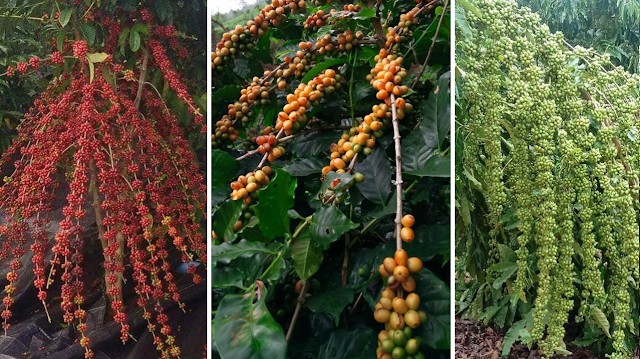
The wind in the coffee market has changed! 60% of Arabica's market share was lost, and Robusta exceeded 40%!
Professional coffee knowledge exchange more coffee bean information Please follow the coffee workshop (Wechat official account cafe_style) in recent years, the industry despises Robsta rather than Arabica. Arabica is the only coffee bean with good flavor. However, Arabica, which is engaged in hard work, has lost its market share of 70%, or even dropped below 60%. According to the United States Department of Agriculture on June 12th

Low-cost freshly ground coffee is all over the street, is there still a market for instant coffee?
With the continuous growth of the domestic coffee market, instant coffee, fine freshly ground coffee and ready-to-drink coffee have developed by leaps and bounds. Compared with the other two categories, drinking coffee is obviously more "low-key", accounting for only 10% of the total market share of coffee consumption. However, on the basis of the increasing consumer demand for coffee, drinking coffee
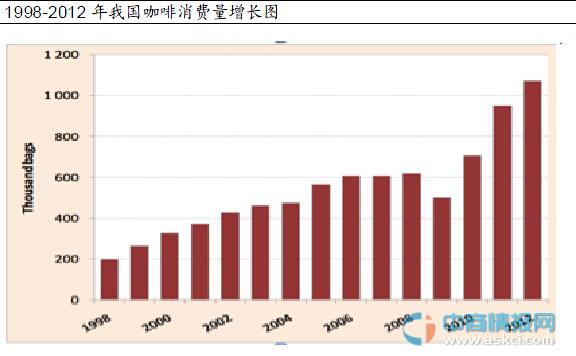
Analysis of China Coffee Consumption Market in 2015
1. Changes in coffee drinking volume and drinking structure in China: compound 13% growth, instant-ready to drink-fresh grinding From 1998 to 2012, coffee consumption in China increased from 199,000 bags to 1.1 million bags, with an annual growth rate of about 12.8%. China has a population of about 1.3 billion, and coffee consumption has risen from 9.6 grams to 47.6 grams, with an average annual growth rate of about 12.1%. If the growth rate of 12.8% is maintained, the deadline
The crisis of eliminated instant coffee Nestle coffee
McDonald's sells coffee, KFC sells coffee, Haagen-Dazs sells coffee, even clothing brand attachment has opened a cafe of the same brand, and Starbucks is still desperately expanding. As a result, Nestl é, the largest brand in the Chinese instant coffee market, destroyed hundreds of tons of instant coffee near its expiration date at a coffee factory in Dongguan in January and February this year. The appearance of Nestl é China Public Relations Department